Unknown's avatar

About rock'n'rollroutemaster

London's Rock and Roll Routemaster

Beware of Mr Baker

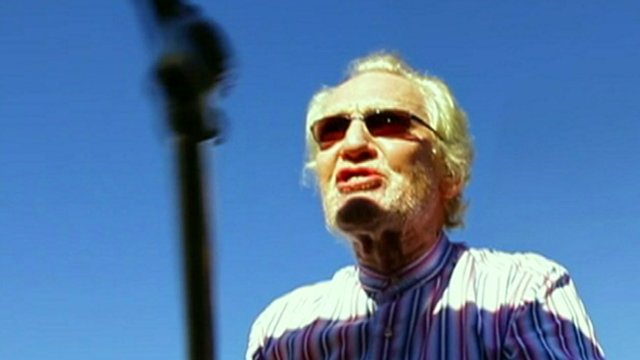
There’s a new film out in the cinemas now at the moment called ‘Beware of Mr Baker’, the Mr Baker in the title being Cream drummer Ginger Baker. It’s kind of the film-of-the-book because he released an autobiography two or three years ago, modestly called Hellraiser: The Autobiography of the World’s Greatest Drummer, which being a semi professional in these matters, I read with interest.

There was a reasonable amount of detail for the anorak like me – dates, names, addresses, inside leg measurements – and a few decent stories because well, he has had quite a life. It was perfectly serviceable as a memoir but nothing special. But the two things I learned most from the book were a) where he got his heroin and b) that Ginger Baker is not a nice man. Really really not a nice man.

It’s hardly surprising then that in ‘Beware Of Mr Baker’, he’s a complete twat.

_67626018_67626017

Any number of talking head rock stars are interviewed and bear out that Ginger Baker has been “fairly consistently horrible to people for the last 50 years” but even bearing that in mind, he raises curmudgeonliness, grumpiness and irascibility to whole new levels. He’s nice about no one and I dare say Mick Jagger’s formidable lawyers may be taking a close interest. The film’s director Jay Bulger had been advised to stay clear of Ginger as he’d heard he was a bit manic, even dangerous and so the film opens and ends with Baker is filmed clocking him on the nose with his walking cane and drawing blood.

However no one interviewed disputes the fact that he’s the greatest drummer in the world. At one point Eric Clapton is asked if he’s as good as Keith Moon or John Bonham to which Clapton simply scoffs and swats the question away. According to Slowhand they shouldn’t even be mentioned in the same breath.

He was certainly probably Rock’s first superstar drummer, invented the 20 minute drum solo and was the first to use two bass drums although he nicked the idea from Duke Ellington’s drummer, Louie Bellson. And his influence has extended to virtually every drummer of every rock and heavy metal band that has followed since that time has sought to emulate some aspect of Baker’s playing, especially African rhythms which he learned in the late 50s from UK jazz greats. But call Ginger a rock drummer to his face and you are likely to need two drumsticks surgically removed for your nether regions. He prefers being called a jazz drummer which is where he started when he turned pro in 1956.

Scuffling for gigs, married young with a child, he did what all sensible people would do of course – he got hooked on heroin, turned on by one of the best British modern jazz drummers of the 1950s, Dickie Devere. Heroin was everywhere in British jazz in the 1950s. “Its like grass, only better” Dickie said. It made him feel great and what’s more, he played fantastically well on it.

Hooked at 21, he took advantage of a fantastically liberal British scheme where addicts registered with a doctor and were prescribed a weekly amount to manage their addictions rather than have to drugs off teh street. Trust Ginger to pull the old trick though, of telling his GP that he as taking more than he actually so that he could sell what he didn’t need for proper cash money. Every monday for years he collected his prescription on Wimpole Street and then walked 200 yards down the road to pharmacy John Bell & Croyden (it’s still there!) at 50-54 Wigmore Street to pick up his, ahem, medication.

When he took smack, people told him he played incredibly, so he took smack before every gig. But when he’d turn up to a gig stoned they’d fire him. It took five years for him to work out that taking smack was a bad idea. Up to 1964, he was getting high and thinking he was wonderful. After that, heI was always trying to quit, which he did 29 times. It wasn’t until 1981, when he was 42 years old, had three kids and moved to a little village in the middle of nowhere in Italy (without the kids – that’s another story) that he kicked the drug for good, mainly because there was none available. He’s been clean since then. But it hasn’t helped his temper….

Libel, Liberace Style

In a quick round-up last year for my Robert Elms Show slot of pop stars who had had their collars felt – shooting racing pigeons? The Clash. Covering a BA flight attendant in yoghurt? Peter Buck of REM – I came across a bizarre and almost forgotten libel case. In 1956 staggeringly successful American piano player Liberace successfully sued the Daily Mirror for implying that he was a homosexual.

Now granted, the 1956 Liberace was not the flamboyant, camp-as-Pontins, star-spangled red-white-and-blue hot pants, full length minks and rhinestones Las Vegas Liberace we all remember from the 70s and 80s, who frankly couldn’t have possibly been anything but homosexual. No, flamboyance in 1956 was a white suit and a gold leaf piano with a glass lid. But still and all, it’s a pretty astonishing tale. And what’s more he won.

The Daily Mirror of 26 September 1956 carried a column which described Liberace as ‘the summit of sex – the pinnacle of masculine, feminine, and neuter, everything that he she or it can ever want … this deadly, winking, sniggering, snuggling, chromium-plated, scent-impregnated, luminous, quivering, giggling, fruit-flavoured, mincing, ice-covered heap of mother love… He reeks with emetic language that can only make grown men long for a quiet corner, an aspidistra, a handkerchief and the old heave-ho. Without doubt he is the biggest sentimental vomit of all time.’

And so it continued. For several more paragraphs.

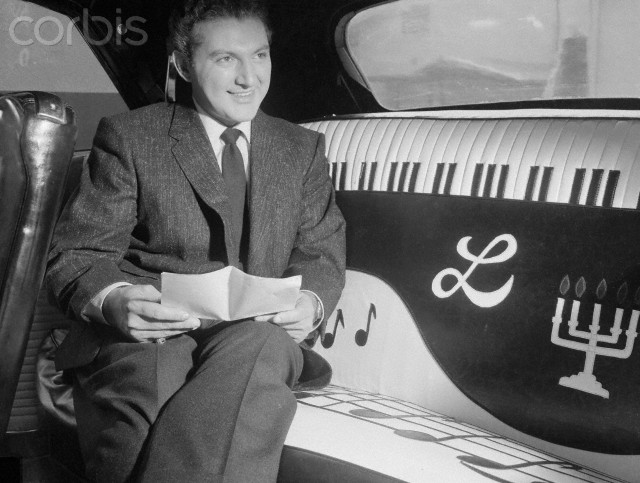
Liberace and his specially imported Cadillac-with-the-piano motif had arrived the day before by ocean liner at Southampton to be greeted by 3,000 fans lining the dock. There were thousands more at Waterloo to meet his private train, The Liberace Express, and they threw so much confetti that afterwards the place was ankle-deep. It took mounted police and dogs to get his car through the crowds and on to the Savoy. The Mirror’s review then was not of his show, but merely of his arrival. He had yet to play a note on his golden piano.

When copies of the Mirror were delivered to his Savoy suite, he was so shocked he almost fainted. His dear mum’s reaction was even worse. After finding the copy her dutiful son had attempted to hide, she read the offending article and had an attack of the vapours and a doctor had to be summoned. No one upsets Liberace’s mum and gets away with it. He decided to sue.
Pianist Liberace Inside His Car
The trial didn’t take place till June 1959 because of Liberace’s busy performance schedule. His Dickensian QC, Mr Gilbert Beyfus, at 76 the oldest practicing barrister on the London circuit, looked like ‘a toothless old lion’, according to Liberace’s own account, apparently fumbling with papers and forgetting his half-moon glasses when they were atop his head the whole time. Ah, but he was lulling the Mirror into a false sense of security (he wasn’t called ‘The Fox’ for nothing). The Mirror didn’t know what had hit them. A sober-suited Liberace spent six hours in the witness-box, defending his reputation and shedding a tear when recounting his sainted mother’s earlier distress. He denied outright and point-blank that he was homosexual, adding that he was ‘against the practice because it offends convention and it offends society’.

The Mirror countered with some feeble retort like their columnist had merely been exercising his right to free speech right to find Liberace so nauseating and was entitled to write about it. The jury didn’t have to agree with what he had written, they just had to agree he had the right to say it. They didn’t agree, as it happened, because after 3½ hours of deliberation – less time than Liberace had spent on the stand – the jury of 10 men and two women found the Daily Mirror guilty and awarded him a then-record £8,000 in damages, plus costs for both sides estimated at over £27,000. That’s nearly £2 million in today’s money.

Leaving court Liberace issued a statement saying he was delighted that his reputation had been vindicated by a British jury. He later quipped that he had cried all the way to the bank. Actually he cried all the way to the Chiswick Empire, where he played his show there that night as scheduled, to a three minute standing ovation before he’d even started

For the rest of his life no one dared inquire about his sexuality, even after his assistant-slash-lover wrote a tell-all book. He still denied everything, although perhaps by that point I’m sure nobody cared or at the very least was terribly surprised.

Liberace died of AIDS-related pneumonia in February 1987 and even in death tried to remain in the closet. The coroner who conducted the autopsy stated that there had been a deliberate attempt to hide the actual cause of death on the original death certificate. The Daily Mirror’s headline was ‘How About A Refund?’ They’re still waiting.

Never Mind The Pistols, Here’s The Clash

The Clash’s first album ‘The Clash’ was released on April 10 1977 in the UK (although not till October 1979 in the USA, they passed on it first time around). That means it’s 36 years ago this month that I ran round to Reidy’s Home of Music after school and bought a copy with all the money – apart from me £200 savings in the TSB obviously – that I had in the world at the time.

‘The Clash’ is regularly ranked in the All Time Top Albums of All Time – the NME said it’s number 13, Q has it at 48 in its list of the 100 Greatest British Albums Ever in 2000 and Mojo put it at number 2 in its Top 50 Punk Albums. Number One was The Sex Pistols and their album that we must call ‘Never Mind….’ out of respect to young eyes and the faint-hearted.

I did not however run out and buy ‘Never Mind…’ when it finally came out in October 1977. Despite waiting for it all year. Despite the fact it had three cracking singles and a fourth that would have been cracking had The Jam not already used the riff in ‘In The City’. And despite the Pistols really inventing the whole movement and my journal of choice, Sounds, having written about them constantly for 18 months.

The truth is it’s not a great album. Any of the singles on there all individually stand as the kind of seismic slices of vinyl that would rotate any generation’s tyres, let alone that there were three of them and each one topped the previous. The truth is everything else on the album’s a bit ropey, and it even almost missed coming out in Punk Rock’s Year Zero, 1977. There was a little too much music hall in the Sex Pistols, especially the cartoonish Johnny Rotten, which almost everybody missed at the time, preferring to take him at face value. I mean I liked him but they didn’t really seem to mean it, maaaaaan.

The Clash, on the other hand, really did mean it.

When they signed to CBS Records in January 1977 for a £100,000 advance, they worried how they were ever going to be able to sing ‘Career Opportunities’ again, having trousered that kind of money, but just put themselves on £25 a week (when the dole was £11).
The_Clash
The songs themselves were mainly written on the number 31 bus which went (and still goes) from their squat at 42 Orsett Terrace, Westbourne Grove all the way over to their rehearsal room in Camden Market. The songs were about things that had actually happened to them. The line ‘I won’t open letter bombs for you’ in ‘Career Opportunities’ is there because guitarist Mick Jones actually did open letters for a government department to make sure they weren’t rigged with mailbombs. ‘Garageland’ was written in direct response to an unkind NME review, which said “the Clash are the kind of garage band who should be speedily returned to the garage, preferably with the motor running” (two years later they were describing the Clash as “the greatest rock band in the world”). ‘London’s Burning’ was also written in at Orsett Terrace, but very quietly, as various people, including Sid Vicious, were asleep in the same room at the time. And most famously ‘White Riot’ was written after Joe Strummer and Paul Simonon, were caught when Police chased West Indian youths in a riot at the 1976 Notting Hill Carnival and fantasised about what might happen if white kids did the same.

Spare a thought for on-off drummer Terry Chimes though. When they asked him what he would do if they made a lot of money and answered ‘buy a Lamborghini’, he was sacked and was listed as ‘Tory Crimes’ on the album sleeve. Oh yes, they did mean it, man.

Jumping Jack Cash

I imagine we all saw the announcement this week that the Rolling Stones will be playing outdoors in Hyde Park on 6 July, almost 44 years to the day since they played their famous, generational gig there on July 5 1969.

The cost of a ticket in 1969? Nothing, nada, zip and zilch. No ticket needed, just roll on up and sit where you like because believe it or not, it was completely free.

In 2013, the tickets – basic standing tickets, mind! – start at £95 and go up to £299. If you want the VIP experience, it’ll cost you £599 or £750 depending on the package you choose. If you want to sit down, then the only ticket that actually gets you something to sit on is the one that sets you back 750 knicker. If you can bear an evening listening to Bon Jovi the night before, then you can buy a joint ticket for both for £1120.

These prices outdo even the bizarre figures I was quoted when they played the O2 at the end of November. The only option I was presented with – and had 2 minutes to agree or lose forever – was a ticket on row Z side-on to the stage costing £275. I declined their kind offer. Who the hell is buying tickets at these prices? I hear you you ask. Well, someone is, because they’ve just added a second date the following Saturday, 13 July.

The Stones in the Park in 1969 is probably the most famous free concert of all time and it’s either fitting or ironic (or both) that they should announce these astronomical ticket prices in the same week that the Sunday Times printed its updated Rich List (Jagger £200 million, Keef £175 million, if you’re interested) and that that globaliser of the everyone-for-themself mentality, Margaret Thatcher, finally pegged out at 87. It’s what she would have wanted.

Reflexively anyone over 40 immediately now starts muttering about how much better things were ‘back in my day’. Hell, there were dozens of free shows in Hyde Park back in the age of Aquarius: the Floyd, Fleetwood Mac, Traffic and 120,000 saw Blind Faith’s debut. And they continued into the 1970s too, with Humble Pie, Queen and dozens of others. When Grand Funk Railroad played in 1971, they were so loud they could be heard half way down Oxford Street – and the wind was blowing against them. If you went deaf, at least you did it for free.

It’s reckoned a quarter of a million people saw the Stones in July 1969. They said – well, their management said – that it was the biggest gathering in the world since the death of Rudolf Valentino in 1926. Fans camped out all night on a beautifully hot summer’s weekend – we apparently had hot weekends in the Sixties as well as free concerts – and everything finished at the very unrock’n’roll hour of 6.30pm. Of only 12 arrests, one was the MD of yoghurt peddlers Chambourcy for breaking Royal Park regulations and selling yoghurts to fans. Not giving them away, but selling them. At a free festival, maaaaaan. And fans were offered a free record for every 3 sacks of rubbish they collected which shifted 15 tons of debris rather nicely, leaving Hyde Park significantly cleaner than when they arrived. Damage to the park was assessed at only £100.

Things really were different back in my day.1969-hyde-park_1740027i

The Wizard of Floyd? The Dark Side of Oz? The Dark Side of the Rainbow?

It’s 40 years this week since Pink Floyd released ‘The Dark Side of the Moon’. In that time, it has sold over 50 million copies and famously entered the Billboard US album charts on 31 March 1973 only to slip out 741 weeks later, sometime in 1987. As it happens, it slipped back in only a couple of months later when it was re-released on CD and everyone and anyone with a decent hi-fi system who had already worn out their vinyl version, went out and bought a new copy in this exciting new format. Dark_Side_of_the_Moon_Desktop_by_ezsteve

The 40th anniversary seemed as good a reason as any to feature the story of making the album in my regular Rock’n’Roll Routemaster slot of the Robert Elms show on BBC London yesterday. I know he quite likes the early whimsical, psychedelic, poppy Floyd, the Floyd of ‘See Emily Play’ and ‘Arnold Layne’, probably the best song about a nocturnal, clothesline knicker-nicking pervert ever written. But he rather stunned me when he revealed that he was actually a huge fan of ‘Dark Side…’ and that despite pressure from his Soul Boy older brothers Barry and Reggie, he’d actually bought himself a copy back in 1973. Regular listeners would also have been stunned and would be forgiven for checking their radio tunings when they heard him playing ‘Us & Them’ just before the one o’clock news. I had asked him to play ‘The Great Gig In The Sky’ but apparently when he played it during a Floyd Fourfer last year, senior BBC London management advised him in no uncertain terms never to play that damn caterwauling song ever again. Harsh but fair, it is a bit scary out of context I suppose.

It also surprised me that he’d never heard of ‘The Dark Side of the Rainbow’, a hilariously fascinating but totally bogus internet meme, which proposes that if you press ‘play’ on your ‘Dark Side of the Moon’ CD at the precise moment that the MGM lion roars for the third time at the start of your ‘The Wizard of Oz’ DVD, there are all sorts of weird and spooky coincidences between audio and video. You know, Dorothy starts running away during ‘On The Run’, Dorothy screams during wordless shouty piece ‘The Great Gig In The Sky’,  the Wicked Witch of the West appears at the precise moment David Gilmour sings “which is which” in ‘Us & Them’, that kind of thing. One theory is that it’s as a result of apophenia, which is the mind’s tendency to focus on the eight spooky matching moments and completely disregard the 992 moments which don’t correspond in the slightest. Another theory – not necessarily mine, but I’m happy to claim it – suggests that it’s more likely as a result of the effects of the tons of recreational drugs the viewer/listener may have taken in order to enjoy the album and the film together. And the amount of spare time they have. And the amount of access to the internet they have.

Apparently some people take it quite seriously. Cable channel Turner Classic Movies (TCM) aired ‘The Wizard Oz’ in 2001 with the Floyd’s magnum opus as the soundtrack rather than the real one. I’ve no idea what they did after 42 minutes when the album ended – the film’s over an hour and a half long. Lit up another one and pressed play again, I imagine.

In A Broken Dream … again

We all probably have one, a record in our collections which is just fabulous, not in a nostalgic I-remember-where-I-was-when-I-first-heard-that kind of way. More in a every-tune’s-a-corker kind of way. A truly worldbeating record which for reasons you can’t fathom was bought by no one else.

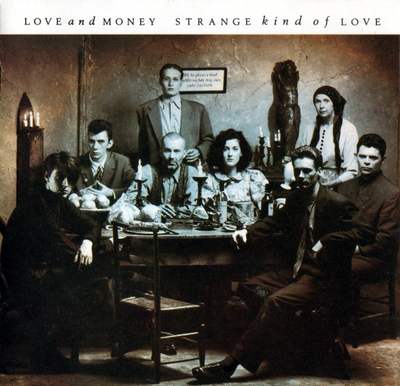
For me, that record is Love & Money’s ‘Strange Kind of Love’.

Recorded in 1988, it was their second album and was produced by Gary Katz who produced every one of Steely Dan’s albums as well as Donald Fagen’s peerless ‘The Nightfly’ solo record, which frankly in my book is as good a CV as you can get. If that weren’t enough, they didn’t have a drummer at the time so they got Jeff Porcaro, one of the greatest session players of all time, member of Toto and the drummer who later did really die in a ‘bizarre gardening accident’, to fill in.

Add on to the top of that kind of pedigree eleven fabulous songs straight out of singer-guitarist James Grant’s top drawer, it’s difficult to imagine how the outcome could be anything other than a 24 carat musical triumph. And it is just that. Tight, slightly funky but decidedly British (Glaswegian even), impeccably sung and played with beautiful lyrics that stay just the right side of poetic, it was my most played record of 1988 and 1989, especially after they played a cracking though sadly Porcaro-less show at the Shaw Theatre on the Euston Road.

And no one bought it.Record label  Fontana marketed the hell out of it, it was well reviewed in all the right places, they toured and toured, but still no one bought it. Or at least not enough for the record company to make any of its huge costs back and they were dropped. Band members went on to play with others and drift out of music, except leader and songwriter James Grant who continues to write and perform. He tweets a bit too and this week he tweeted a link to a version of the old Python Lee Jackson hit ‘In A Broken Dream’, you know the one Rod Stewart sang on for a fee of two carpets for his new sports car in 1969. Anyway this new version is acoustic only, James in his kitchen, just man and guitar, and is out and downloadable this weekend from the usual suspects (iTunes, Amazon, 7digital, Spotify). And it’s all for charity, in this case the Teenage Cancer Trust.

Anyhoo, I forwarded to good friend and Routemaster mentor Robert Elms, because he is a major Rod fan and often slips the Python Lee Jackson tune into the playlist for his show. Not surprisingly he liked it very much and thus began the quest to find a copy that he could play, a quest we imagined would take days and weeks, talking to agents, publishers, managers and lawyers but in the end took less than 15 minutes and is testament to how very easy it is to find anyone out there on that damned Internet. I tweeted James, he tweeted me back within 2 minutes with his email address, I emailed James and he emailed me back the MP3 file. And I emailed it to Robert. Job done.

love-and-money-strange-kind-of-love-cover-front

Aboard the Zeppelin part 1

I don’t play them much now but I have to confess that I played Led Zeppelin a lot when I was at school. A lot. They weren’t that fashionable – I was at school in the 1970s for God’s sake – and the Clash and the Pistols were meant to wipe them off the face of the earth but they remained almost every Sixth Former’s guilty secret. Outwardly you would rather ostentatiously carry ‘Never Mind The Bollocks’ for all to see, but inside your Our Price carrier bag you had Zep IV – on pink vinyl, safely hidden, never to be lent out and only played on my Dansette.

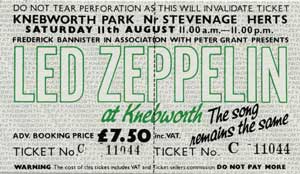
The only public acknowledgement that any of us kinda dug the Zep came when they announced a show at Knebworth in 1979. When we got that news, we all sent in our  postal orders for £7.50 for tickets and all hitchhiked to the arse end of Stevenage together to see them. Fabulous they were too.

Fast forward 25 years and I was chatting to some of the younger folks, you know, those born after I went to University and happened to mention that I had been at Knebworth  and all of a sudden I was treated like a living god. It didn’t matter that I had been one of at least 400,000 people who attended over the two weekends (I was there on the second weekend, August 11th) or that we had to sit through Chas & Dave, Utopia or an interminable delay while Keef & Ronnie’s New Barbarians haggled for more money before Zeppelin came on. Led Zeppelin had skipped a generation who couldn’t possibly think they were cool and found a new one who did. And even more amazing: I was cool too.

All Things Considered

At the end of last season, as we trundled along from a nice lunch at Westfield in Shepherd’s Bush along to the Rangers Stadium in South Africa Road, my friend Joe Boyd – record producer, writer and source of much information on all things London and the late 1960s (he was there) – introduced me to his companion Davia.

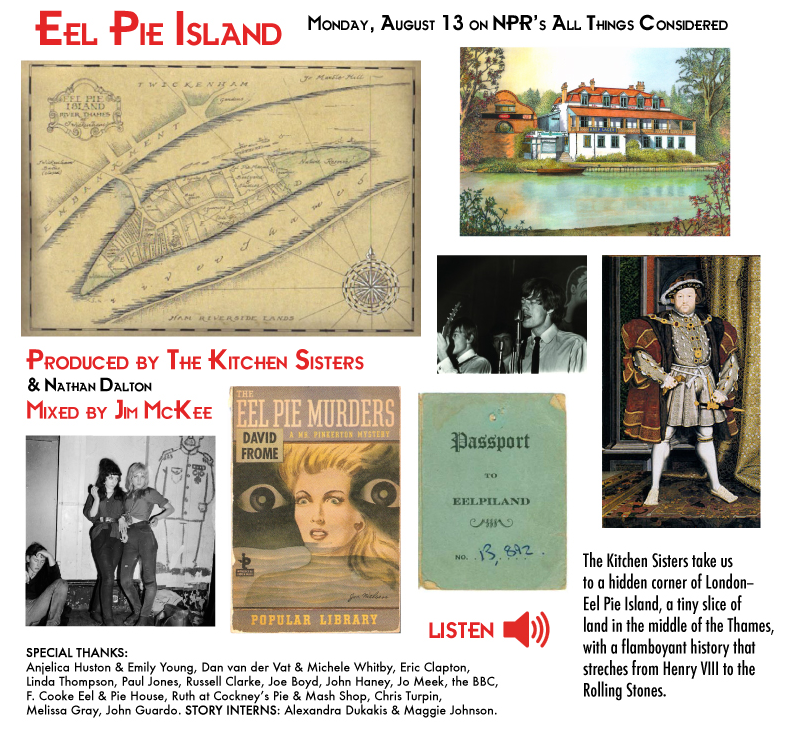
As we strolled she asked me if I knew anything about Eel Pie Island. I rattled off a few facts – R&B club of the 50s and 60s in the heart of the Thames Delta, Rod Stewart first spotted on the train station playing the harmonica, 2d to cross the bridge and Colonel Barefoot’s Rock Garden – and apparently impressed she asked me if I’d like to be involved in a piece on Eel Pie Island she was putting together for National Public Radio (NPR), the US’s public service radio network roughly equivalent to BBC Radio.

Davia Nelson is one half of the Kitchen Sisters, independent producers of radio content mainly for NPR for which they have won a sackload of Peabody Awards. NPR is syndicated to over 900 stations across America and its flagship show All Things Considered regularly gets 20 million listeners.

I said yes.

So on a rather stormy evening in May – you remember May, in the Spring, poured down every freaking day – I went over to Joe’s flat in Little Venice and chatted to Davia for an hour or more over a glass of wine. I consulted my notes and she held the microphone. What a great combination and she seemed very happy with what I’d come up with.

And I thought no more of it, heard no more from Davia but fast forward to August and she emailed to say it was on All Things Considered on August 13, where I would hear it for the first time. It’s a terrific piece, incredibly well researched, about 13 minutes long and I rub shoulders with a number of other contributors including Eric Clapton and Anjelica Huston, who one forgets mainly grew up in London (and went to Holland Park School).

To listen to the story of Eel Pie Island, click here …

OB from the Olympic Park

“Budget an hour and a half to get there and get in,” said Sarah the Robert Elms Show producer. “And bring photo ID.”

All of which I did of course. I didn’t want to be late, pegging it down a concourse and running into the BBC London pre-fab studio with my pages of notes flapping in the breeze and getting wet with the heavy raindrops.

In the end, the time taken from Finsbury Square EC2 to the temporary BBC London studios overlooking the Olympic Park in Stratford? 21 minutes including security.

London is truly empty at the moment. The Mayor and Transport for London did such a good job of trying to mitigate the usual nightmare that is London traffic with scare stories and initiatives about working from home during the Olympics that everyone has left town. Gone. Just like that. On top of everything, the whole transport network is so well organised at the moment that you’d have to be a complete twonk to get lost. There are hundreds of volunteers in fetching Olympic uniforms with matching foam fingers pointing you towards where you need to go.

So I sat around for an hour waiting for the show to start, watching the tide of lucky families who had bagged tickets for some event or other in the Park. And commiserating with Robert who had lost his wallet somewhere between St Pancras and Stratford International. Credit cards, cash, driving licence, photos of the kids, Nectar card, the lot. On Tuesday, he paid me back the £25 he owed me for his and Alfie’s tickets to our traditional near-London QPR pre-season friendly in High Wycombe only for me to give it him back barely 12 hours later so he had some cash for incidentals.

.

Another Dry Night In The Park

I’m not a religious man but the Weather Gods or whoever-is-upstairs-controlling-the-weather-although-I-don’t-really-believe-in-that-kind-of-thing must be smiling kindly on Robert Elms and his attempts to recreate his radio in the stunning surroundings of the new Serpentine Pavillion in Hyde Park.

We were in the Park two weeks ago for the first of eight weekly shows and miraculously the biblical rainfall took a 12 hour break and blue sky reigned rather than grey sky rained. Against infinite odds, the same thing happened last night. Any and all squalls over London were redirected by some celestial air traffic controller to be – I assume – pouring themselves over Kent or Hertfordshire or Essex and most definitely not over central London.

There was another interesting and eclectic list of guests: me on first talking about Hyde Park’s free concerts before Jason Solomons with a run-down of the Top Ten London films of all time, a rather clever magician and Asif Kapadia, who directed the film ‘Senna’, which was so good I thought he might survive at the end. As I sat at the back with a (free) beer, I noticed an odd guy standing next to me in a tatty jacket, espadrilles and what was clearly a prosthetic face and a wig. Turned out this was Barry From Watford, a stand up comedian who struggled a bit but was such a likeable character that in the end he went down really well.

Last on was Chas Hodges, fine raconteur and even finer piano player who chatted about his 50 year career as a musician, playing sessions for Joe Meek, Heads Hands and Feet and Chas ‘n’ Dave before finishing the evening off with a terrific knees up at the joanna. Health & Safety may even have been hovering as it was getting close to 10.30 by the time he put his piano down.

There’s another one next week and it’s sold out apparently. Suggs is headlining.