
The Black-skinned Blue-eyed Boys

Black History Month is just ending, so I thought I’d have a look at the Black British chart pioneers, those first black British acts to trouble the chart compilers. Not surprisingly the UK singles charts were pretty white in the 1950s, full of the kind of singers your mum and dad – or even your grandma and grandad – might like, Jimmy Young, Lita Rosa and Dickie Valentine plus imports like Frank, Perry and Eddie Fisher.

But then immigration was only just starting. The SS Empire Windrush docked at Tilbury in June 1948 and it was only in the 1960s that the West Indian population was sizeable enough to affect the charts. The first UK Singles chart was in December 1952 – our first Number One was Italian-American crooner Al Martino’s Here in my Heart  but it wasn’t until December 1954 that there was an act of colour at Number One: Let’s Have Another Party by Winifred Atwell. Ms Atwell was a Trinidadian boogie-woogie and ragtime pianist who enjoyed enormous popularity in Britain and Australia from the 1950s, selling over 20 million records. 

She is also the person who discovered one of our most beloved of singers, Matt Monro. She heard his demo and she got him a deal with Decca Records at a time when he was still working as a bus driver in North London. Decca decided Terry Parsons, Monro’s real name of course, wasn’t showbiz enough, so he took Matt from the Fleet Street journalist who had written his first good review and Monro from Winifred Atwell’s father.  

She was however not technically from the UK and neither were fellow holders of the Number One title like Harry Belafonte (Mary’s Boy Child) or Frankie Lymon & the Teenagers (Why Do Fools Fall in Love?) or Tommy Edwards (It’s All in the Game) who were all Black Americans (Belafonte was actually from a Jamaican background and still with us at 93). 

No, the first British act of colour to hit Number One was As I Love You as late as February 1959 by … Dame Shirley Veronica Bassey, now 83 and resident of Monte Carlo for many years, but born in Tiger Bay, Cardiff to a Nigerian father and an English mother. Her schoolteachers noticed even when she as 6 or 7 that she had an extraordinarily strong voice and asked her to please not sing so loudly. Not surprisingly by 13 she was singing in Cardiff pubs and clubs, in London by 16 and signed to Philips at 18. Her first single though, Burn My Candle turned out to be utter filth, with lyrics like: Open my door, and spurn the scandal, who wants to help me burn my candle, at both ends! The only radio station in town, the BBC, considered it so racy that they refused to play it, but Philips stuck with her and eventually her cleaner releases made the charts, starting with The Banana Boat Song and then As I Love You, which zipped to Number One for four weeks after she sang it on TV’s Sunday Night at the London Palladium.

She wasn’t necessarily a pioneer, for there was one black act who paved the way but never troubled the charts. His name was Dudley Heslop, a name that may mean little or nothing to you but his stage name Cuddly Dudley may ring some bells with older readers. Cuddly Dudley was the featured singer on ITV’s Oh Boy! ITV’s Saturday evening pop show. He arrived here from Kingston, Jamaica in 1947 and worked the West End clubs with a calypso act until rock and roll hit in the mid-1950s and his manager promoted him as Britain’s answer to The Big Bopper. A chunky bloke, he got some flashy suits, snazzy ties and a new stage name.

You’d know him because he sang two songs a week for more than a year with Oh Boy!’s house band Lord Rockingham’s XI, but alas Dudley was unable to turn his TV exposure into hit singles. He certainly paved the way for the last Number One of the 1950s, What Do You Want to Make Those Eyes at Me For? by Emile Ford & the Checkmates.

Emile Ford – Michael Emile Telford Miller – was from St Lucia and came to London in the mid-1950s to study Sound Engineering. In fact, once the hits dried up in the Sixties, he retired from singing and spent the rest of his life designing audio systems (he held dozens of copyrights not least for the technology that all Karaoke machines use). But back to the Fifties: he started singing in clubs and won a talent contest at the Cafe Royal at 68 Regent Street as part of the 1959 Soho Fair. Fortunately it was sponsored by Pye Records and first prize was an audition and a contract for a single, which turned out to be a slightly doo-wop version of a really old Broadway tune from 1911 called What Do You Want to Make Those Eyes at Me For? which was Number One for six weeks.

Famously he’s the first black British artist to sell sold over a million copies of a single. What is almost never mentioned though is that Emile Ford & the Checkmates were the first integrated, multi-racial pop group. The Checkmates were Emile, his two St Lucian half-brothers, Dave and George – George Ford was later the bass player with Steve Harley & Cockney Rebel by the way – and four white blokes and on big occasion even three white female backing singers. They never had any trouble, never had any comments from anyone and always had plenty of work. In 1960!

The early Sixties was basically guitar groups, none of whom came from the West Indian community, well, not yet anyway. It fell to an axiomatic Jamaican teenager – she was called Millie and she certainly was small – to be the gamechanger. Millie Small’s 1964 global smash My Boy Lollypop may have been recorded in central London but producer Chris Blackwell had had the good sense to bring the voice straight from Kingston. And the guitar, courtesy of the ubiquitous Ernest Ranglin, flown to the UK for the first time in his life for the occasion. It sold a million here and five more around the world. Caribbean music had arrived and had hit the mainstream. Progress was slow but by 1967 ska tunes direct from Jamaica were hitting the charts with great regularity, reaching a zenith with Desmond Dekker’s wonderful and wonderfully unintelligible Israelites.

Black-owned record labels were smart enough to know that most records were bought in chain stores like WH Smith or Woolworths, which happened to be the shops the BBC used for the UK Singles chart. Once Desmond Dekker got on Top of the Pops, it was a pretty short route to the top of the charts, because these songs were being bought not only by West Indian kids around the country but by young, white Herberts like me and I bought my records in Woolies. It wasn’t too long before bands forming at schools, particularly schools in London, would be made up of white kids and black kids. In 1965, three kids – Pat Lloyd, John Hall and Eddy Grant – yes, THAT Eddy Grant – at Acland Burghly school in North London made their own guitars in woodwork and formed the Equals to play youth clubs and get girls. When they were joined by the Gordon twins, Derv and Lincoln, they got serious and hopped on the Mecca/Top Rank circuit.

Signed to a record deal in short order, they did two things: they quit their jobs and they headed straight down to see Colin at the Carnaby Cavern in Ganton Street, just off Carnaby Street, who dressed them in the latest green silks and pink and purple paisleys. If they were going to look different, they were going to look REALLY different. At one point lest we forget, Eddy Grant – yes, THAT Eddy Grant – dyed his hair blond.
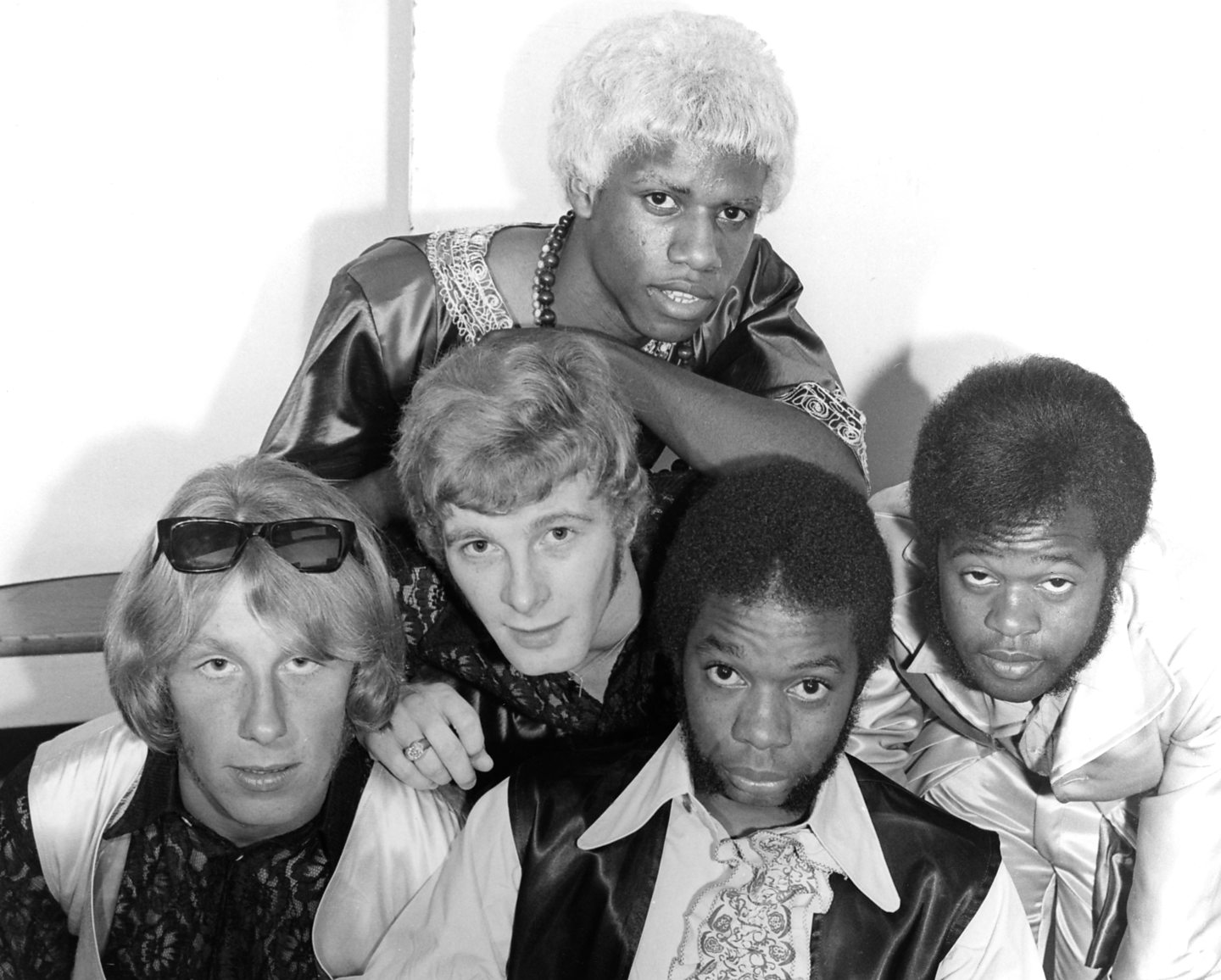
The first single did a little on the continent, but it was the follow up – well, the B-side of the follow up, once it was flipped – the Eddy Grant-penned Baby, Come Back that put them on the map. Number One in Germany, Belgium and the Netherlands, it finally nipped across the channel more than a year after it came out and shot to the top and stayed there for 6 weeks.

At exactly the same time, West Londoners The Foundations had formed in a basement club under at record shop in Bayswater. They were three white guys, four West Indians and Sri Lankan, aged from 16 to 38. After a successful audition with Pye Records, they were offered two Tin Pan Alley songs, Let The Heartaches Begin and Baby Now That I’ve Found You. They passed on Heartaches, which was snapped up by 6 foot 7 inch blues shouter Long John Baldry who took it to Number One. They went with Baby Now That I’ve Found You and once Radio Luxembourg got behind it, hit the lower reaches of the Top 30. A Top of the Pops appearance was booked and ‘ere long they toppled the mighty Baldry from the top in November 1967.

Fifty years on, all the Equals are still with us and are still close friends. Alas, Clem Curtis lead singer of the Foundations, had his head turned and suggested they now be billed as Clem Curtis & the Foundations. The rest of the Foundations suggested he sod off and sacked him, bringing in Barbadian Colin Young for the next biggie, Build Me Up Buttercup. Hardly anyone noticed.

Both bands are still on the road – well in any other year they would be – and are still doing their thing and a great night out.They both had other hits but gradually styles changed and ironically they may have been superseded by the rise of reggae and disco in the 1970s. The only exception is Eddy Grant, who became THAT Eddy Grant: the first owner of black record label, the first owner of a black recoding studio in his backyard in Stamford Hill and a global superstar with Electric Avenue, Living on the Frontline and I Dont Wanna Dance.

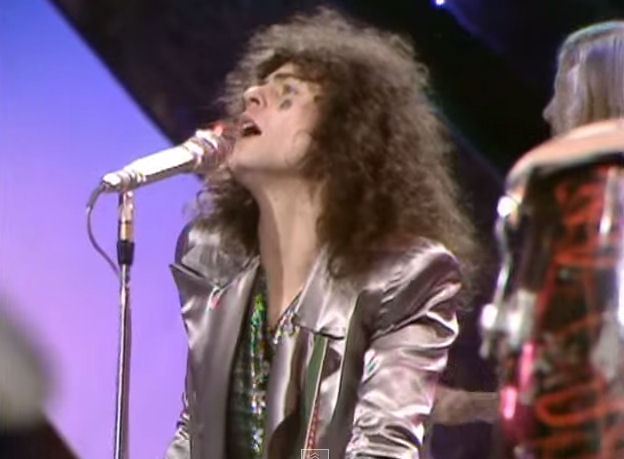
Marc Bolan: 43 years gone and forever 29

It is 30 September as I write and this would have been Marc Bolan’s 73rd birthday. Alas, the 16 September just gone was the 43rd anniversary of his death of in a car crash aged 29, 2 weeks before his 30th birthday.

Bolan burst onto the scene just as I and people of my vintage was about the right age to receive him. I was only 9 in 1970 when T.Rex’s Ride A White Swan first hit and I wasn’t yet watching Top of the Pops obsessively try Thursday at 7.25pm so I missed him, but my older sister used to get Jackie magazine and one week there was a picture of this odd-looking guy with staggering hair and for some reason glitter on his cheeks. An extraordinary sight for any 10-year-old and I waist.

By 1971, it had taken Marc Bolan fully 6 or 7 years to be an overnight success. Ever the musical magpie, he had ruthlessly jumped from bandwagon to bandwagon until he found one that worked. He was a folkie a la Dylan, he was in 60s power pop group, he was a cross-legged psychedelic pixie, all without any noticeable success. But then he bought an electric guitar and became a teen idol, which is the bandwagon that worked for a few years.

He was not a great musician – he certainly didn’t think he was – the music is quite simple and the lyrics in hindsight are utter nonsense knocked off in ten minutes (if that long) but they sounded great then and they still do. And I must not have been the only one watching him avidly on those Thursday evenings in 1971 and 1972. Everyone else and many of them went on to form bands by the end of the decade. You can’t really imagine a lot of Punk like The Damned especially, the New Romantics, Depeche Mode, Culture Club, Oasis, The Smiths and U2 without T.Rex.

He was born Mark Feld on 30 September 1947 at Hackney Hospital in east London to lorry driver Sid and Phyllis Feld, and younger brother to Harry (as his younger brother took over the world a pop idol, Harry was content to be a bus driver). Sid Feld was Jewish, his mother Phyllis Atkins was not, so technically Mark was not Jewish either but he was aware of his dad’s heritage, not least because he was named after Sid’s brother, his uncle Mark Feld who was beaten to death after the end of the war in 1946 in a fight with more than a hint of anti-semitism

The family lived on the middle floor of four rooms of a large Victorian house at 25 Stoke Newington Common. There was a coal fire in one room and only cold water in the bathroom. He escaped the dreariness of poverty with his imagination, fired by visits the ABC cinema in Lower Clapton Road or the Regent in Stamford Hill. No scholar at any stage, he like many kids got hit pretty badly by the Elvis Presley bug and from the age off nine onwards, it was music and fashion and nothing else. Style was everything to him and school meant nothing. He only read one book willingly – The Life of Beau Brummel about the 19th century dandy George Brummel. He’d seen the film with Stewart Grainger so sought out the book at his local library

Aged 11, he almost never left the house without being dressed to them nines and carrying a rolled-up umbrella. He also went in search of a tailor. His little gang of Mods would meet in a coffee bar near Petticoat Lane market and then go off looking for clothes in the Jewish East End: Mr Bilgorri of Bishopsgate where all the best faces went. Borowick’s of Bow on the Mile End Road or Connicks on the Commercial Road in Whitechapel, one of the only places you could get American imported Levis. He was the Beau Brummel of Stamford Hill and would parade up and down the High Street till he got noticed by the older Mods.

By 13 he was venturing up to the West End regularly, blagging his way into the Lyceum where you had to be 16 to enter but he looked so sharp sartorially speaking and was so well connected he had no difficulty getting in. However, he never danced because he didn’t want to crease his jacket. He was hated – because he was so sharp and cool

What was more of a mystery was where he got the money to pay for his sartorial tastes because bespoke suits don’t come cheap. He would occasionally buy off the peg and get his mum to customise it at home, but big brother Harry suggests fondly that he may have been light-fingered, with a speciality in nicking anything that he could exchange for money but especially motorbikes and scooters, that vital accessory for many mods. Your scooter may have been stylish but it certainly was not secure. According to legend, the same key started every Vespa made between 1956 and 1965.

In early 1962, Town magazine were planning a photospread about the emerging youth culture of Mods called The Young Take The Wheel, with a little photo feature called Faces Without Shadows. Features Editor Michael Parkinson – yes that Michael Parkinson – had heard about the Stamford Hill Boys and despatched Don McCullin, later a very celebrated war photographer, to photograph their three leaders. They were the 20-year-olds Peter Sugar and Miki Simmonds and Mark Feld, only just 14, dressed to the nines and gibing it some gob. His main priorities, he said, were looking different: I mean you got to be two steps ahead. The stuff half the haddocks you see around are wearing I was wearing years ago when we used to go round on scooters in Levis and leather jackets. A kid came up to me in my class in his new suit, an Italian box it was. He says to me ‘Just look at the length of your jacket, he says ‘you’re not with it. I was wearing that style two years I said. He didn’t like that.

(For clarification: a haddock is a rival Mod but a very poorly dressed one).

When the issue of Town appeared in September 1962, Mark complained that the photos had actually been taken much earlier in the year, so obviously his wardrobe had completely changed and there was no way he’d even consider wearing any of that kind of clobber. Also by September 1962 issue came out, his parents moved to Wimbledon in south London and Stamford Hill lost its King Mod. He was distraught but he turned 15 and left school (you could in those days) and continued his education in Soho at the Flamingo, the Scene, the WAG and Le Discotheque on Wardour Street. One day he popped into the cinema and saw Summer Holiday in 1963 and decided he was going to sing like its star, Cliff Richard

He lived at home and was largely unemployed – work was for haddocks. Pushed by his mother Phyllis, he worked at Edgar James menswear in Tooting High Street for a few weeks until he saw an ad for Lucie Clayton’s modelling school in New Bond Street W1 which required £100, paid by Phyllis his mum. He may not have been a top model but he did get some work for Littlewoods and menswear chain John Temple and even got some TV extra work, so with his fees, he went out and bought an acoustic guitar , mainly because he’d fallen hard for Bob Dylan. He learned to play using Bert Weedon’s Play In A Day tutorial book and spent all days cross-legged on the floor strumming and singing in an odd voice, which no one who heard it thought would take him anywhere

With no manager, he hustled himself up West where he was no based. In January 1965, he paid to make his first demo of two songs at Maximum Sound Studios in Dean Street W1 one of which – natch – was Blowin’ In the Wind. The session took 22 minutes and included six goes at Blowin‘ because he discovered he couldn’t actually play guitar and play harmonica at the same time. According to a witness, his harmonica playing made Bob Dylan sound like Larry Adler. Not surprisingly, whoever he peddled the tapes to, rejected him. He was auditioned by EMI at Abbey Road in February 1965 but it lasted just 15 minutes before leaving unsuccessfully. He was Toby Tyler at this point, from a 1960 Disney film Toby Tyleror Ten Weeks with a Circus about an orphan who runs away to join the circus. He was convinced it was only a matter of time before a British Dylan burst onto the scene and he was convinced it was going to be him. Unfortunately, it turned out to be Donovan.

Later that week he moved into a flat in Landale Road in Barnes with two actors one of whom was James Bolam who had just started on BBC in a sitcom called The Likely Lads. Toby Tyler became Mark Bolan much to James Bolam’s chagrin. Mark couldn’t understand why Bolam was so upset. Get over yourself Jakes, there’s no way Bolam was ever going to be anywhere near as successful as Bolan. If that weren’t bad enough, Mark became Marc from a recent trip to Paris. It gets worse: there was now an umlaut to the o making it Bölan, although thankfully that didn’t last long.

Finally after much hustling and using new mates from up West, he got an audition with Decca Records who now needed their own Donovan which led to a deal for one single. That single was The Wizard released in November 1965 with the most bizarre press release ever written and I quote:

Marc Bolan was born in September 1947. When 15 years had passed, he travelled to Paris and met a black magician called The Wizard. He lived for 18 months in The Wizard’s chateau with an owl called Archimedes and the biggest whitest Siamese cat you could ever find. He then felt the need to spend time in Rome. For 2 weeks, he strove to find himself and the returned to London where he began to write. His writings mirror his experiences with mentionings of the magician’s pact with the great god Pan. In London, walking down the Kings Road, Chelsea in the dead of the night he chanced to meet a girl called Lo-og who gave him a magic cat. The cat, named after the girl is now his constant companion and a source of inspiration to him. Now the Wizard’s tale is set down for all to hear on Marc’s first recording for Decca.

No one bought it.

He barely played live, only a few occasional gigs, did a Ready Steady Go! but it was disastrous. Decca gave him another shot and he recorded another four songs which failed to see a release. He went into 1966 generally amazed that he wasn’t a star yet. At least his rival, another guy who chopped and changed as fashions mandated, that Davie Jones from Brixton, hadn’t got anywhere yet either.

Hanging around the right places as usual meant he hooked up with Yardbirds manager Simon Napier Bell who after another failed single put him in John’s Children, a band he was also managing and who were signed to Track records, home of the Who. They needed a songwriter, he needed a band, but he’d never been in a group before so he didn’t last long, In April 1967, on his way back from a German tour supporting The Who, he saw a Ravi Shankar concert which gave him the idea for a new bandwagon. He left John’s Children even before their first single Desdemona was released and formed Tyrannosaurus Rex, originally a 5-piece but soon slimmed to a cross-legged, be-kaftanned, josticked psychedelic bongos-and-acoustic-guitar duo. 

They were flavour off the moment. Signed to a record deal at last, they recorded a debut album with surely the best title ever: My People Were Fair and Had Sky in Their Hair… But Now They’re Content to Wear Stars on Their Brows. It cost £200 and found a champion in DJ John Peel and his Radio London show The Perfumed Garden. When he became resident DJ at the psychedelic club, Middle Earth, he made sure Tyrannosaurus Rex were on the bill for much of the next year. When he moved to Radio One he played them constantly on Top Gear. If he did a gig at a university, it was a condition that Tyrannosaurus Rex played too. 

He seemed genuinely intrigued by hippy culture but there’s little doubt he saw it as a vehicle to meet his enormous ambition. Thanks to John Peel the 4 Tyrannosaurus Rex albums – Prophets, Seers & Sages: The Angels of the Ages (1968), Unicorn (1969) and A Beard of Stars (1970) – were reasonably successful, not Top 10 successful but certainly Top 20. It was all Tolkein and Hobbit kind of stuff but no one ever saw him read a book, but he certainly came up with some wacky but very contemporary (for the time) poetry.

After touring America to almost complete indifference in 1969, he did three things. Firstly he sacked Steve Took, who had always been more interested in recreational drugs than the bongos (alas, Steve was not destined for a long and healthy life – he died of an overdose aged 32 in 1980). An ad in the Melody Maker at the beginning of October 1970 brought 300 replies, none of which he opened because his upstairs neighbour had introduced him to Michael Norman Finn – yes, that is his real name – of Thornton Heath who worked as a painter of shops. He worked on the huge mural that adorned the Apple Boutique at 94 Baker Street. As it turned out neither percussion nor harmony singing were particular strengths of Mickey’s, but he looked great hair, clothes, cheekbones. They got on like a house on fire and visually complimented each other.

Secondly, he bought an electric guitar, a white Fender Stratocaster, according to legend from Syd Barrett lately on Pink Floyd. And thirdly, as he had decided to go less hippy dippy and more hard rock he shortened the band’s name to T.Rex. With his new electric guitar, he went to Trident Studios in Soho on the first day of July 1970 and made Ride A White Swan, just him on electric guitar, producer Tony Visconti on bass, and 4 violins. There are no drums, just handclaps and percussion. And from perhaps a little less warble in the voice. It stormed up the charts, stalled, fell back a bit then got a second wind and shot back up to Number 2. It was only kept from the top by Clive Dunn’s Grandad.

He was a pop star at last. although he didn’t really look the part though. He wore plain dungarees on ToTP although his hair looked pretty awesome, so his manager Tony Secunda’s wife, Chelita took him shopping. Out went all the hippy cloaks, in came girls’ clothes, lots of satin and a bit of makeup offstage as well as on, which was unheard of. He played on his looks, upped the sexuality in his music

After Ride A White Swan, he brought in a drummer and a bassist with whom he recoded his first Number One in Hot Love. The new band arrived at BBC Studios in Lime Grove in West London on March 24 1971 to perform it on ToTP. Marc was wearing a green lurex blouse, yellow loon pants and his unruly corkscrew hair. Chelita added the last detail: glitter on his cheeks, just below his eyes. Glam Rock arrived in that moment.

Hot Love was number one for six weeks and they were off to the top of charts for the next three years – four Number Ones in Hot Love, Get It On (Bang A Gong), Metal Guru and Telegram Sam – written about his accountant, Sam Alder, who sent a telegram with the news that Get It On had reached number one – and three Number Two hits Jeepster, Children of the Revolution and Solid Gold Easy Action. He was the best-selling singles artist of 1971 and 1972 and T. Rex record sales accounted for about 6 percent of total British domestic record sales.

He was lost for a while after about 1974. Glam faded away and he didn’t really evolve the way old friend and rival Davie Jones – now David Bowie of course -m and he never really cracked America as Bowie had. He sat out a couple of years, drugs and booze made him a bit chubby. He lived in LA, south of France and Monte Carlo and only returned to London in late 1975. He got in shape, had a couple of hits, New York City and I Love to Boogie and even had his own six-part TV series, Marc. One episode reunited Bolan with his former John’s Children-band mate Andy Ellison, then fronting the band Radio Stars; his last show, recorded on 8 September 1977, had David Bowie as his guest.

One week later, on the night of September 15 1977, Bolan and wife Gloria had drinks at the Speakeasy at 49 Margaret St, W1 then dinner at Morton’s in Berkeley Square. After a long evening, Jones drove Bolan home at around 4am the next morning, September 16. As their purple Mini was traveling along Queens Ride, SW13 less than a mile from their home, at the southern edge of Barnes Common, the car left the road as it crossed a treacherous humpbacked bridge, shot through the fence and smashed into a sycamore tree. Gloria was seriously injured but Bolan’s side took the impact and he was thrown into the back of the car and killed instantly. All he had was a small bruise on his forehead.

T. Rex influenced almost everyone who followed for the next 10 years. If you were between the ages of 10-15 in 1972 and you formed a band when you were 18, your major influence was likely to be Marc, so any glam rock, the punk movement, post-punk, indie pop, Britpop and alternative rock, even American bands where he never really sold any records, acts such as New York Dolls, the Ramones, R.E.M. Look for great riffs, short songs and a big image

He had assumed the role of Punk grandfather or elder statesman – 1977’s album Dandy In the Underworld had its press launch at punk club The Roxy Club at 41-43 Neal St WC2 with various Pistols, Gen Xs and Damneds in attendance. He was apparently at the Roundhouse in 1976 to see The Ramones.  He went out on tour to promote it and he took along punk band The Damned as support. At the end of the tour in Portsmouth, the Damned joined them onstage for a 13-minute version of Get It On. On the bus trip back, he got out at Putney Bridge near where he lived, went to a phone box and called his dad, who was helping with Rolan, Marc’s 18-month-old child, to come and get him.

Which is a nice story to end on.